

Hey there, fellow manufacturing enthusiasts! As a supplier of horizontal machining centers, I've seen firsthand how crucial it is to choose the right one for your shop. It's not just about getting the job done; it's about maximizing efficiency, quality, and your bottom line. So, let's dive into how you can pick a suitable horizontal machining center.
Understand Your Workpiece Requirements
First things first, you need to know exactly what you're going to be machining. Consider the size, shape, and material of your workpieces. If you're dealing with large, heavy parts, you'll need a machining center with a robust structure and high load - capacity. For example, if you're making large engine blocks, a machine with a large work envelope and high - torque spindle is a must.
On the other hand, if you're working on smaller, more intricate parts, precision becomes the key. You'll want a machine that can achieve high - speed and high - accuracy machining. A machine with a high - resolution control system and fine - tuned servo motors can make a huge difference. Also, think about the materials you'll be working with. Different materials, like aluminum, steel, or composites, have different machining requirements. Harder materials may need a machining center with more power and rigidity.
Evaluate the Axes and Configuration
The number of axes on a horizontal machining center plays a significant role in its capabilities. A basic horizontal machining center usually has 3 axes (X, Y, and Z), which are suitable for simple milling, drilling, and boring operations. However, if you need to perform more complex machining, such as contouring or multi - sided machining, you might want to consider a machine with additional axes.
The 4 Axis Horizontal Machining Center adds a rotational axis, typically around the Y - or Z - axis. This allows for more flexibility in machining parts, as you can access multiple sides of the workpiece without re - clamping. It's great for parts that require complex geometries, like turbines or aerospace components.
For even more complex jobs, the 4 Axis CNC Horizontal Machining Center comes in handy. The CNC (Computer Numerical Control) system provides precise control over the machine's movements, enabling you to achieve highly accurate and repeatable machining.
Look at the Spindle Performance
The spindle is the heart of a horizontal machining center. It directly affects the cutting speed, feed rate, and overall machining efficiency. When choosing a machine, pay attention to the spindle's speed range. A wider speed range allows you to machine different materials and perform various operations. For example, a high - speed spindle is ideal for finishing operations, while a lower - speed spindle can handle more heavy - duty roughing.
Torque is another important factor. High torque at low speeds is necessary for cutting hard materials, like stainless steel. A spindle with a built - in motor, also known as a motorized spindle, can provide high power density and excellent performance. It reduces the number of moving parts, which means less maintenance and higher reliability.
Consider the Control System
The control system is what makes the horizontal machining center smart. A user - friendly and advanced control system can significantly improve productivity. It should allow for easy programming and quick setup. Look for a control system that has features like conversational programming, which enables operators to create programs using simple language rather than complex G - codes.
It's also important that the control system is compatible with modern CAD/CAM software. This integration allows you to transfer design files directly to the machining center, reducing the time and errors associated with manual programming. Some control systems even offer remote monitoring and diagnostic capabilities, which can help you troubleshoot issues quickly and keep your machine running smoothly.
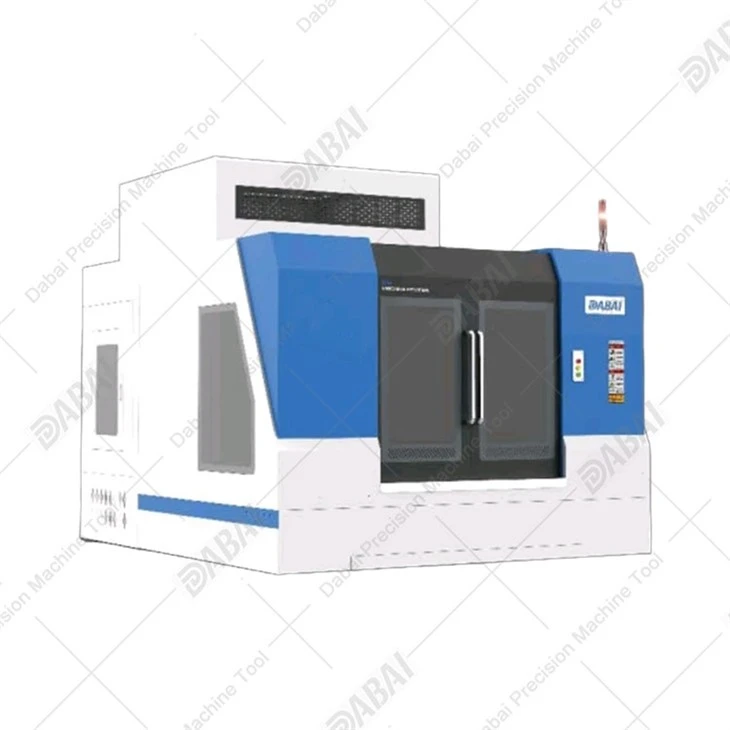

Check the Accuracy and Repeatability
Accuracy and repeatability are critical in machining. A high - accuracy machine can ensure that your parts meet the required specifications. Look for a horizontal machining center with features like linear scales and ball screws. Linear scales provide direct feedback on the position of the axes, resulting in more accurate positioning. Ball screws, on the other hand, offer smooth and precise motion transmission.
Repeatability is about how consistently the machine can produce the same results over multiple cycles. A machine with good repeatability reduces the need for rework and helps maintain product quality. Manufacturers usually specify the positional accuracy and repeatability of their machines in their product documentation. Make sure to compare these values when evaluating different models.
Evaluate the Machine's Build Quality
The build quality of a horizontal machining center affects its durability and performance. A machine with a solid, heavy - duty frame is more rigid and can withstand the forces generated during machining. It also reduces vibration, which is essential for achieving high - quality surface finishes.
Look at the construction materials and the way the machine is assembled. High - quality cast iron or steel frames are common in well - built machines. The guideways, whether they are linear or box - type, should be made of high - quality materials and have appropriate lubrication systems. A well - lubricated machine lasts longer and operates more smoothly.
Think About the Tool Changer
The tool changer is an important part of a horizontal machining center. It allows you to change tools quickly during the machining process, which can save a lot of time. Consider the number of tools the tool changer can hold. A larger tool magazine enables you to perform more operations without having to stop and change tools manually.
The tool - changing speed is also crucial. A fast - changing tool changer can reduce the non - cutting time and increase the overall productivity of the machine. Some tool changers use advanced technologies, like servo - driven mechanisms, to achieve high - speed and reliable tool changes.
Look at the After - sales Support
Finally, don't forget about the after - sales support. A good manufacturer should provide comprehensive training for your operators, so they can use the machine effectively. They should also offer prompt technical support in case of any issues. This includes access to spare parts and maintenance services.
Before making a purchase, check the manufacturer's reputation for customer service. Read reviews from other users and ask for references. A reliable manufacturer stands behind their products and is committed to helping you succeed.
Conclusion
Choosing a suitable horizontal machining center is a big decision, but if you follow these steps, you'll be well on your way to finding the right machine for your needs. Remember to consider your workpiece requirements, the axes and configuration, the spindle performance, the control system, accuracy and repeatability, build quality, the tool changer, and after - sales support.
If you're interested in our CNC Horizontal Machining Center or have any questions about choosing the right machine for your shop, don't hesitate to get in touch. We're here to help you make the best choice for your manufacturing business.
References
- Machining Technology Handbook
- Industry - specific research reports on manufacturing equipment