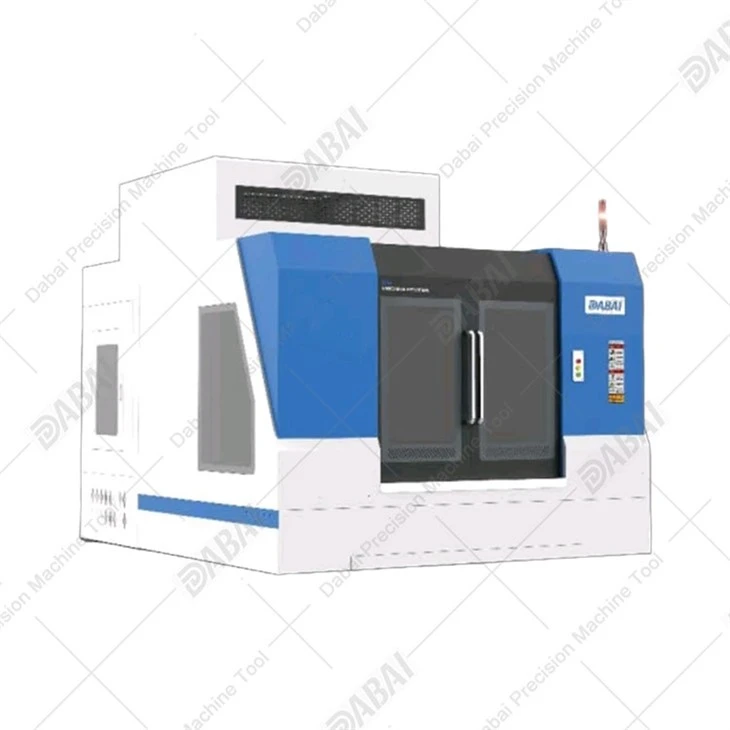
If you've ever spent time around a CNC Horizontal Machining Center, you know it's a total workhorse-churning out tight-tolerance parts all day, every day. But here's the thing: even the most powerful horizontal CNC machine can grind to a halt (or worse, get damaged) if you don't have the right parts clearing system. That's where the chip conveyor comes in, and it's way more important than most new operators (or even some shop managers) give it credit for. As a supplier that builds and supports these machines day in and day out, I've seen firsthand how skipping proper chip management or ignoring the conveyor's role can turn a productive shift into a headache-and I want to break down exactly what this unsung hero does, why it's non-negotiable, and how it keeps your entire CNC HMC Machine running smooth.
First, let's set the scene to make this relatable. When you're milling metal, aluminum, steel, or even tough aerospace alloys on a CNC Horizontal Machining Center, the cutting tool isn't just shaving off tiny shavings-it's generating a ton of chips. Those chips aren't fluffy little things; they're often sharp, heavy, and sometimes hot enough to singe a glove if you get too close. If those chips get left sitting in the work zone or the machine's internal passages, they cause all kinds of problems. I've seen a 4 Axis CNC Horizontal Machining Center come to a stop because a pile of chips jammed the way of the rotary axis, ruining a $1,000 part and costing the shop 3 hours of downtime just to clear it. That's the main job of the chip conveyor, but let's dive deeper than just "moving chips"-it's a multi-tasker that protects your machine, your parts, and your team.
First up, the obvious: it removes chips before they cause mechanical issues. Here's the thing about horizontal CNC setups-their work zone is oriented horizontally, so chips don't just fall out on their own like they would in a vertical machine. That means every single bit of metal shavings, cuttings, and even sludge from cutting oil has to be actively pulled out of the work area and away from critical components. The chip conveyor is like a tiny, relentless janitor that does this nonstop while the machine is running. If it slacks off, chips build up in the base of the machine, get into the linear guides or ball screws, and act like sandpaper. Over time, that wear on those precision parts leads to sloppy cuts, incorrect tolerances, and expensive repairs. I've talked to shops that skipped regular conveyor maintenance and ended up replacing their HMC's linear rails twice as often as they should have-total waste of money that could've been avoided with a good conveyor.
Then, there's part quality. If chips are left in the work zone while a new cut is happening, they can get pressed into the part surface, leaving scratches, dents, or even tiny indentations that make the part scrap. I had a customer a few months back running aluminum motor housings on their CNC HMC Machine-they thought their existing conveyor was fine until they started noticing 2% of parts had surface defects. Turned out the conveyor's chain was wearing, so it was leaving small piles of chips in a corner of the work area that the tool path was hitting after the final finish cut. Once they upgraded to a properly maintained conveyor, that defect rate dropped to zero. It's a small detail, but for shops that run high-volume, tight-tolerance parts, that difference between good parts and scrap adds up fast to thousands of dollars saved (and no wasted time reworking parts).
Another big one: keeping cutting fluid clean. Every horizontal CNC machine uses a lot of cutting oil or coolant to keep the tool cool, lubricate the cut, and flush chips away. Those fluids don't do their job if they're full of tiny chip bits, metal fines, and sludge. The chip conveyor works in tandem with the machine's filtration system-when it pulls chips out of the work zone, it's also pulling them out of the coolant sump. If chips sit in the coolant, they break down the fluid's additives, make it less effective at cooling, and can even cause bacterial growth that creates a stinky, slimy mess. Not only that, dirty coolant can damage the tool's cutting edge, leading to more tool changes and higher tooling costs. As a supplier, when we set up a new CNC Horizontal Machining Center, we always emphasize that the conveyor is part of the fluid system, not a separate afterthought. It's why we design our horizontal CNC setups with conveyor sizes matched exactly to the machine's cutting capacity-no undersized conveyors that get overwhelmed mid-run.
Don't sleep on safety, either. Sharp metal chips are a hazard no matter where you go in a shop. If chips pile up around the CNC HMC Machine, they create a tripping risk, and when an operator has to manually sweep or scoop them out (which is a total no-no if you can avoid it), they're at risk of cuts. The chip conveyor automates that entire process, so there's no need for anyone to get close to the work zone while chips are being generated. I've seen shops where operators were manually removing chips with a hook- that's a fire hazard too, by the way, because hot chips can ignite if they're left sitting on the machine frame. A reliable conveyor moves those chips into a sealed, chip bin so they're contained, cool, and out of the way until disposal. That's a big win for keeping your shop OSHA-compliant, too-less manual material handling means fewer safety incidents, which is everyone's top priority.
Wait, but not all chip conveyors are created equal, right? That's where picking the right one for your machine and operations matters. If you're running light, small parts on a 4 Axis CNC Horizontal Machining Center, a smaller scraper conveyor might work fine. But if you're cutting heavy steel billets on a horizontal 5 axis CNC, you need a heavy-duty chip conveyor with reinforced parts that can handle those dense, thick chips without jamming. I've had customers try to save a buck by pairing a cheap conveyor with their new HMC, and within six months, they were replacing it because it couldn't keep up with the production load. As a supplier, when we build our CNC Horizontal Machining Center lines, we engineer each conveyor to match the machine's spindle power, cutting speed, and typical chip volume. It's not an add-on-it's part of the machine's core functionality.
Let me also address a common myth I hear from new machinists: "I can just turn the conveyor off while I run a quick job." Maybe for a 10-minute test cut, but even then, chips will build up in the work zone fast. If you forget to turn it back on after the job, you're setting yourself up for a problem next time. The conveyor is designed to run in sync with the machine's cycle, so it moves chips as they're generated, not after they pile up. That sync is another reason we build our horizontal CNC systems with integrated controls that tie the conveyor to the machine's PLC-so if the conveyor trips an overload, the machine automatically stops before damage happens, not after.
So, what happens if your chip conveyor fails? I've seen it all: a shop lost an entire production run because chips jammed the tool changer arm, a machine's ball screw was ruined by embedded chip fines that turned it into a rough surface, and even a coolant pump seized up because it was sucking in too many chip bits. The cost of fixing those issues is way higher than the cost of regular conveyor maintenance-checking the chain tension, cleaning the auger (if it's an auger conveyor), clearing any debris from the chute, and making sure the motor is running smoothly. It's like changing the oil in your car-you don't skip it to save a few bucks, and you definitely don't wait until the engine seizes.
At the end of the day, the chip conveyor's function isn't just "moving chips"-it's protecting your CNC Horizontal Machining Center, preserving part quality, extending the life of your tools and fluids, keeping your team safe, and keeping your production line running. As someone who works with these machines every day, I can tell you that this small, often overlooked component is one of the biggest factors in how reliable your horizontal CNC operations are. If you're looking for a CNC Horizontal Machining Center that comes with a conveyor engineered to match its performance, or you want to upgrade your existing HMC Machine's chip management system, we're here to help. We'll talk through your production needs, the materials you cut, and the volume you run to make sure you get the right setup that keeps downtime low and parts coming out perfect. Don't let an underrated part derail your next big job-reach out to start the conversation about upgrading your chip conveyor and machine today.